Work

Work you can interrogate.

Anonymized project summaries covering video analytics, workflow monitoring and research engineering. Each describes the scope and limits of the work.

Computer vision / Anonymized work

From video data to useful systems.

Client and collaborator details are anonymized. The projects span engineering integration, prototypes and research experiments; Solve Unit led the algorithm work in the enterprise projects.

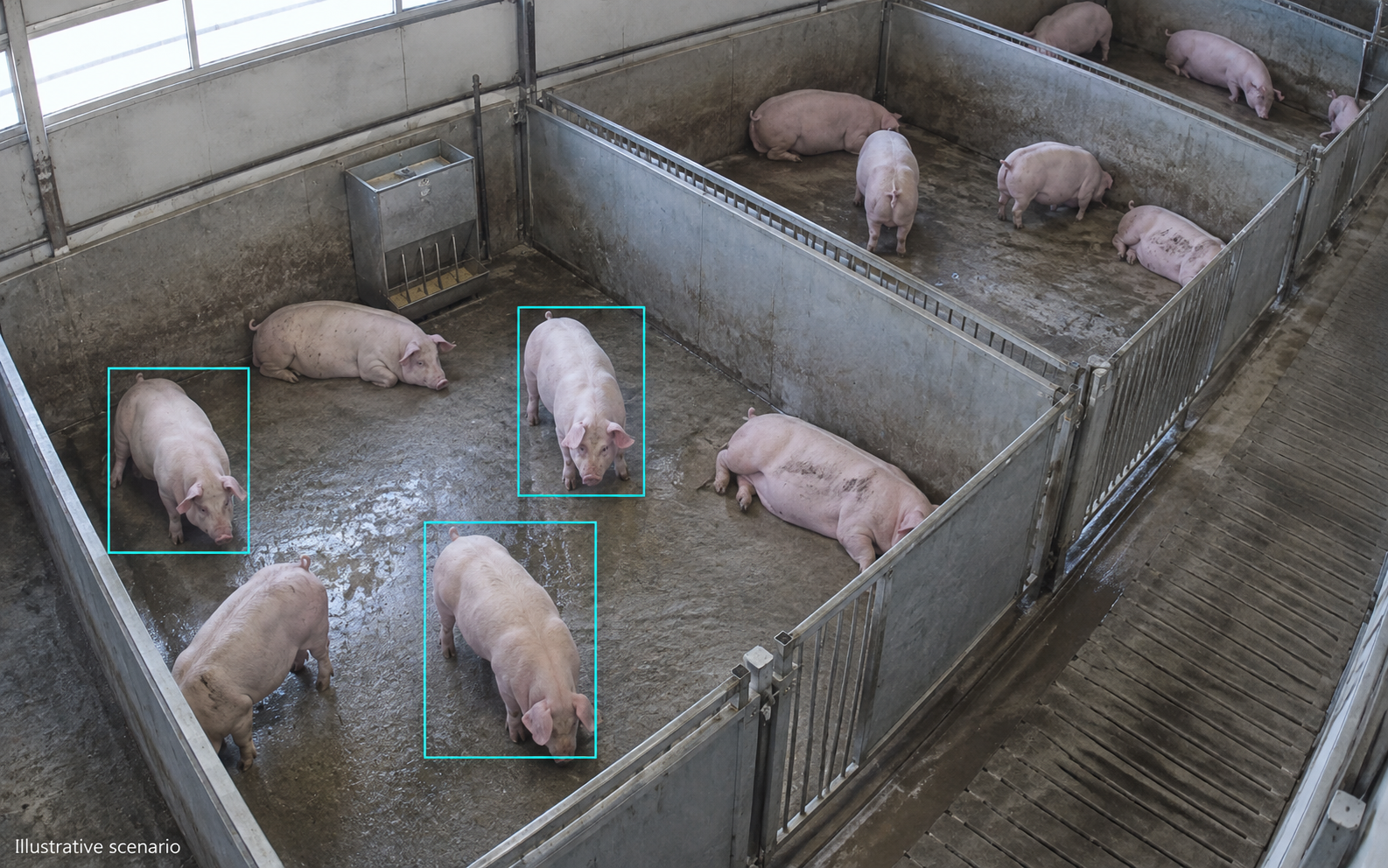
AI-generated illustrative livestock video analytics scenario
AI-generated illustrative scenario; project details are anonymized.

01 / Engineering integration

Multi-camera video analytics

Built components of a video analytics service around RTSP streams, model inference, event logic and APIs, with container deployment and operational debugging.

Relevant to video ingestion, model integration, alert workflows and deployment constraints.

View anonymized case ↗
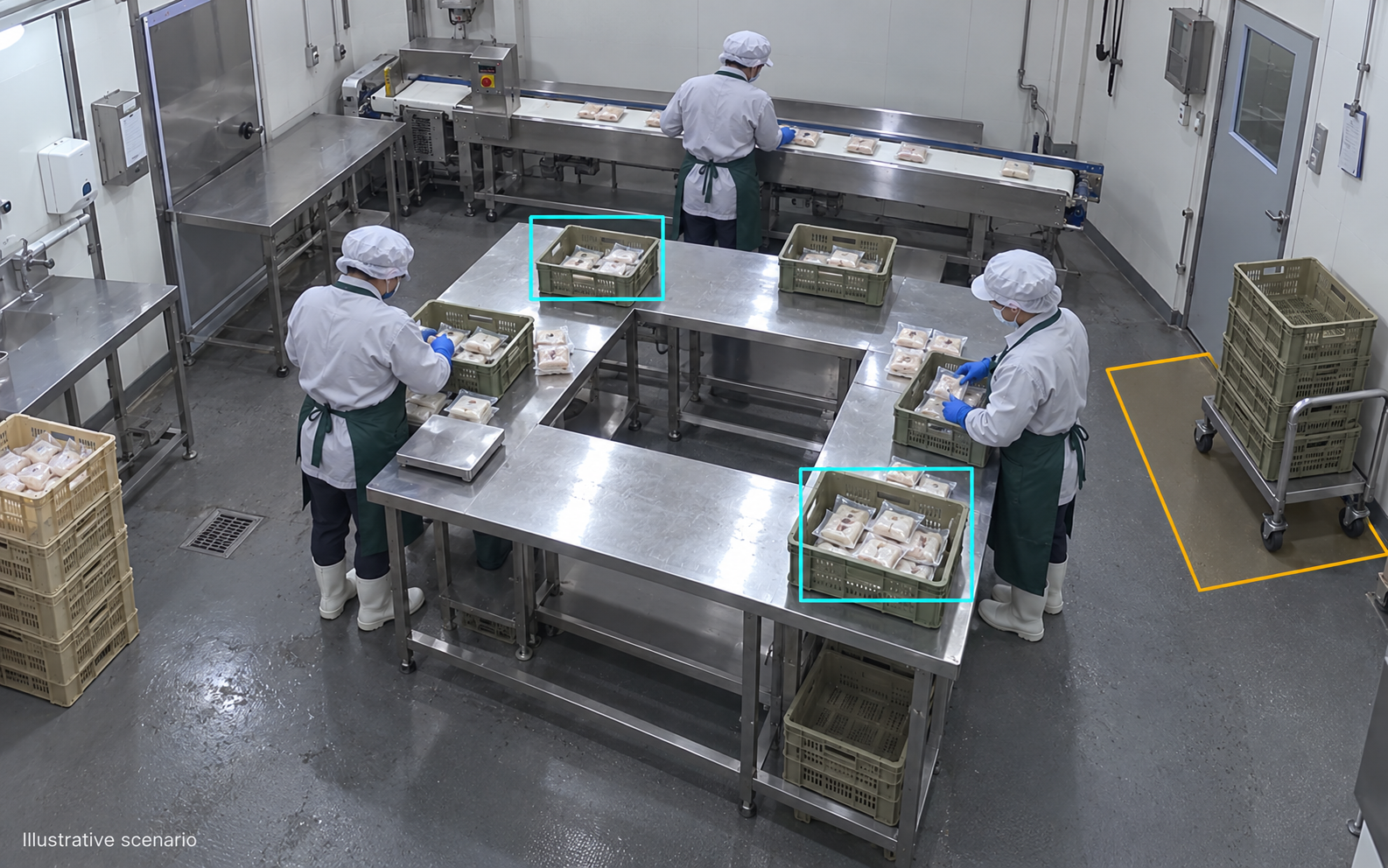

AI-generated illustrative material-handling monitoring scenario
AI-generated illustrative scenario; project details are anonymized.

02 / Recorded-video prototype

Material-handling workflow monitoring

Explored workflow-event recognition and threshold logic on recorded video. This was a demonstration prototype, not a production multi-camera deployment.

The demonstration used a shortened time threshold; the operational rule requires separate validation.

View anonymized case ↗

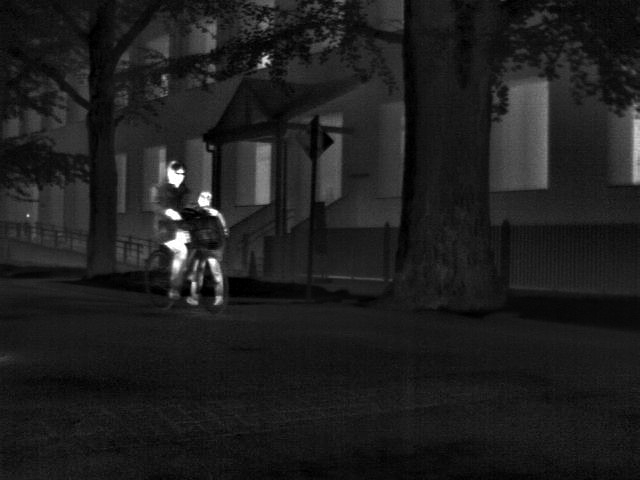
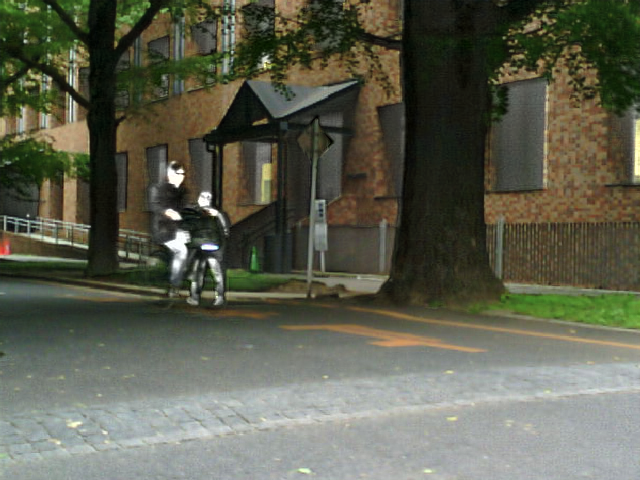
Visible

MSRS 00571D low-light visible input

Infrared

MSRS 00571D infrared input

Fused output

Selected seed-0 fusion output for MSRS 00571D
MSRS 00571D · gamma=2.2 low-light simulation · selected seed-0 example

03 / Research experiment

Infrared–visible image fusion

Explored image fusion for degraded imaging conditions, including comparisons on the MSRS and RoadScene datasets.

Training settings differed and outcomes were mixed; the comparisons are not a universal performance claim.

View anonymized case ↗

Have a video analytics or model integration problem? Start with a scoped evaluation or prototype.

Discuss a project

Academic citation verification across heterogeneous sources

A reference can be real and still be wrong for the sentence using it. The system needed to distinguish existence, metadata accuracy and evidential relevance.

The problem

Citations arrive as incomplete prose, DOI strings, mixed formats or model-generated text. Individual scholarly APIs have different coverage and identifiers.

The system

Parse and normalize the input, search five scholarly sources, reconcile candidates, compare fields and present confidence without hiding uncertainty.

The evidence

Users see source links, title and author differences, publication metadata and an explicit explanation of what was or was not verified.

  • Multi-source retrieval pipeline
  • Field-level mismatch detection
  • Rate-limit and partial-result handling
  • Production web integration

Personal research archive

From paper idea to measured result.

Summaries are grounded in completed code, experiment logs and delivery packages. They are anonymized; private data, weights and unpublished method details stay private.

PINN

Scientific ML / Physics

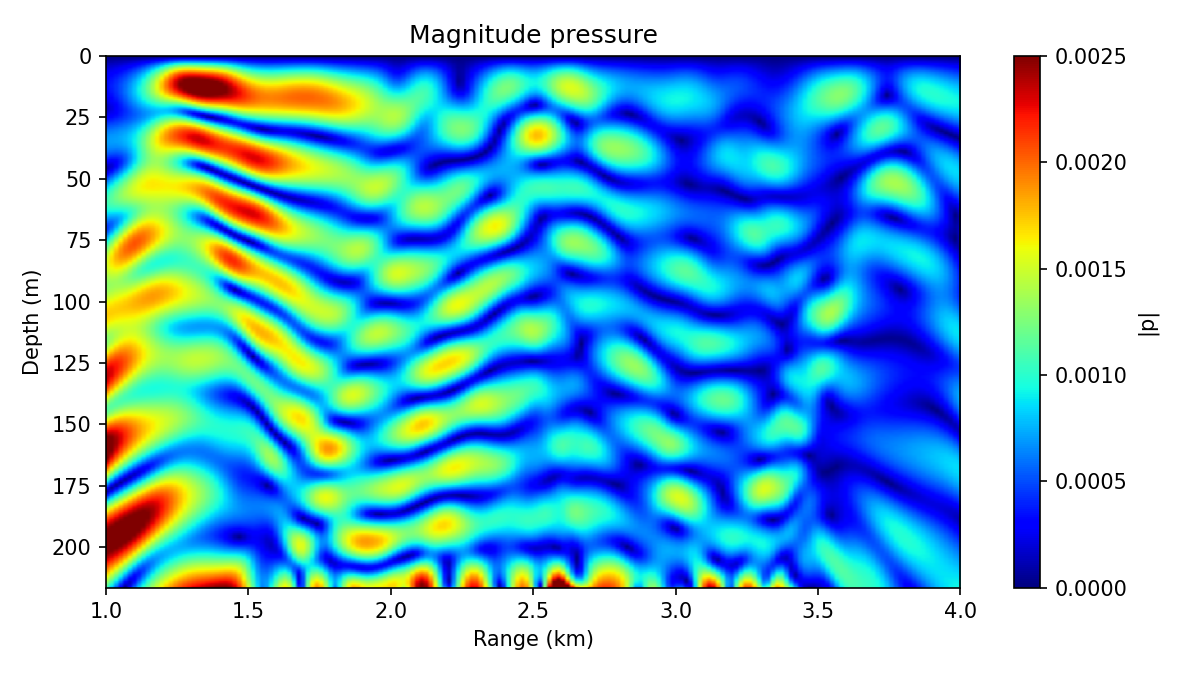
Ocean acoustic pressure magnitude predicted by a physics-informed neural network across range and depth
Predicted pressure magnitude from the KAN model with a hard boundary constraint.

Physics-informed ocean acoustic field prediction

Reproduced a published pressure-field method, introduced a KAN backbone with hard boundary constraints, and aligned evaluation against Kraken ground truth.

Built
Rebuilt the baseline, stabilized PDE training, ran more than 12 ablations, and packaged repeatable training and evaluation.
Evidence
Matched baseline accuracy in the interpolation region with 35k parameters instead of 130k, while reporting the remaining extrapolation gap.
VIS

Computer vision / Detection

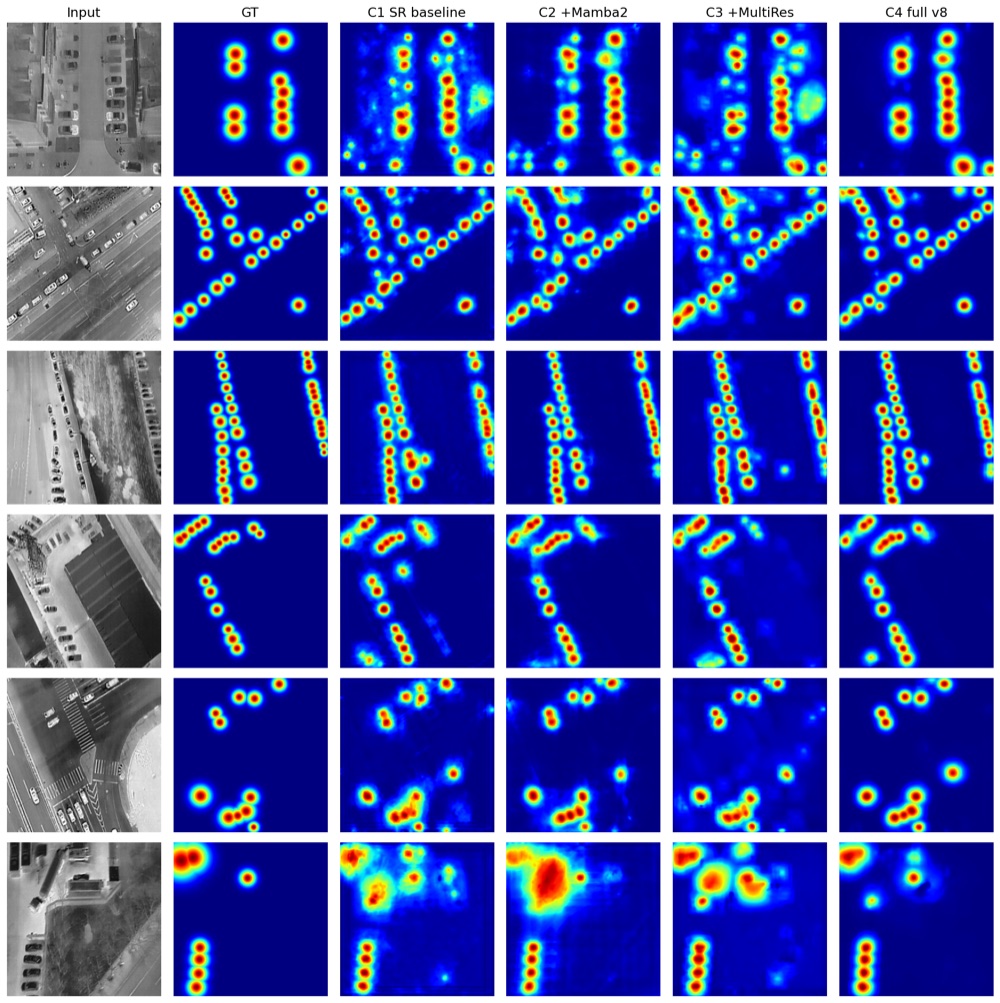
Ablation comparison for aerial small-object detection showing inputs, ground truth and four response heatmaps
Input, ground truth and response heatmaps from four detector configurations.

Small-object detection in aerial scenes

Implemented a self-relation detector for the SIMD aerial dataset, focusing on small targets and rare-class imbalance.

Built
Unified the training path, added gated residual fusion and rare-class sampling, and delivered weights plus one-command inference.
Evidence
Best mAP50 increased from 0.7269 to 0.7584 under the same evaluation setup.
FUS

Remote sensing / Image fusion

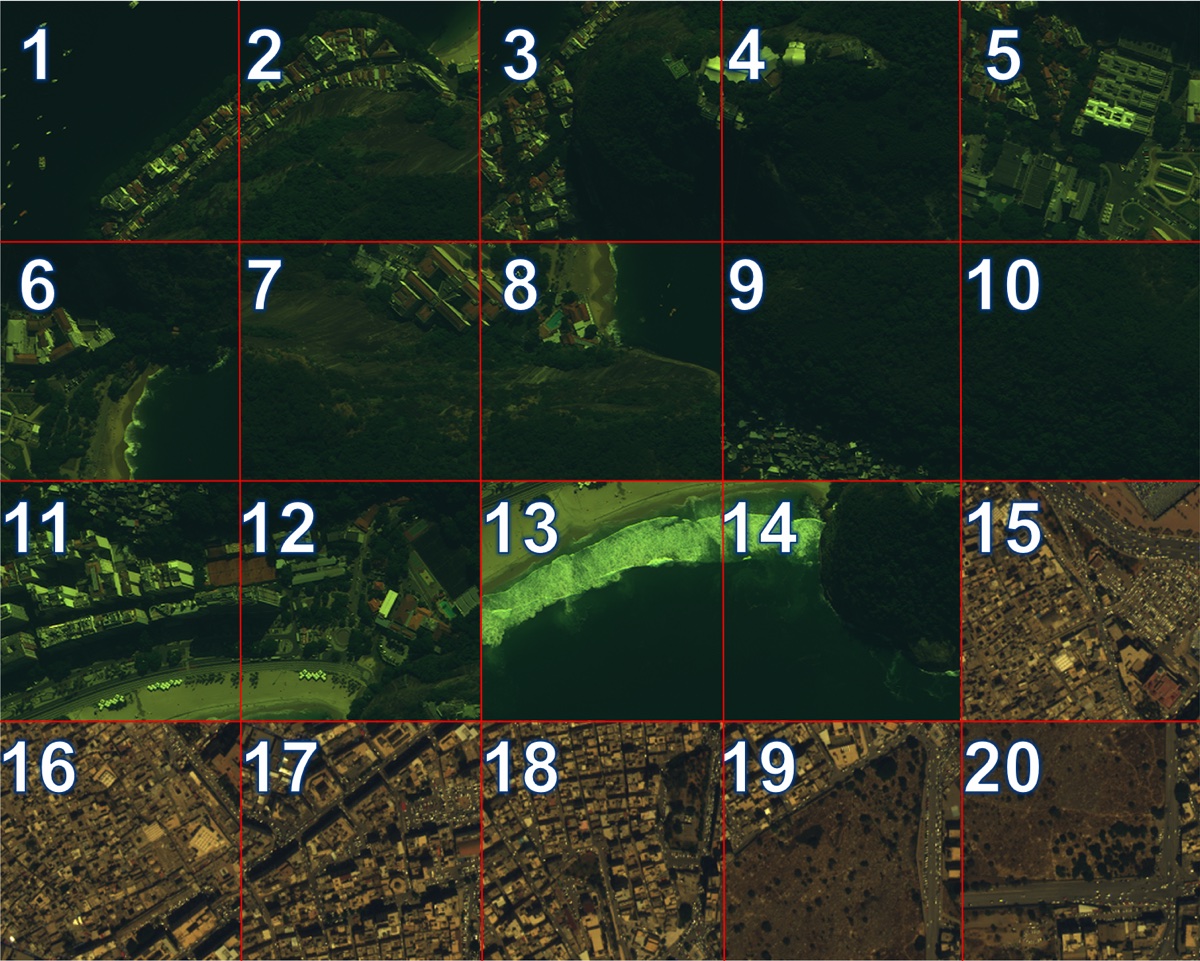
Twenty satellite scenes used to evaluate multispectral and panchromatic image fusion
Twenty WV3 remote-sensing scenes used in the reproduction study.

Multispectral and panchromatic image fusion

Built a cross-dataset training, inference and metric pipeline around FusionMamba and PanFormer.

Built
Covered WV3 and GF2 at reduced and full resolution, isolating the contribution of frequency and attention modules.
Evidence
Eight complete ablations produced 320 replayable outputs with matching metrics and generation logs.
MMF

Multimodal ML / Emotion

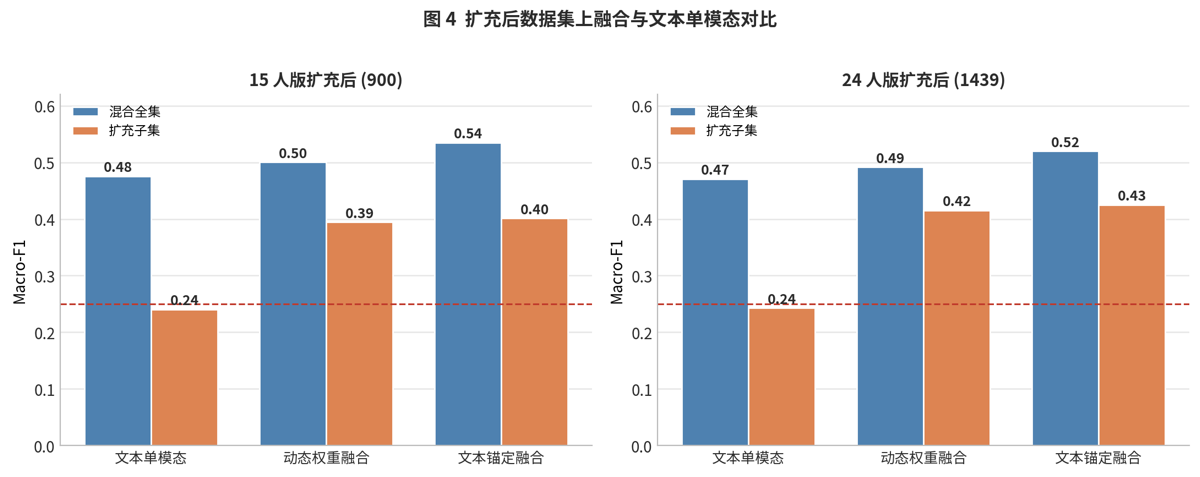
Macro-F1 comparison of text-only, dynamic-weight fusion and text-anchored fusion on expanded 15-speaker and 24-speaker datasets
Text baseline versus two fusion strategies on the expanded datasets.

Text, speech and expression fusion

Built a text-anchored multimodal emotion experiment focused on speaker-independent generalization and missing-modality robustness.

Built
Implemented LOSO evaluation, five seeds, unimodal and fusion baselines, weight ablations, and report generation.
Evidence
Macro-F1 on the expanded experiment rose from a 0.471 text baseline to 0.520 with fusion.
NLP

NLP / Information extraction

Nebula-style knowledge graph of anonymized filing entities and relations; aggregate metrics remain visible.

Joint entity and relation extraction from Chinese filings

Adapted an autoregressive text-to-graph method to long Chinese filings and tested where type-constrained candidate pruning actually helps.

Built
Converted 651 annotations, adapted the Chinese encoder, implemented constrained decoding, and retained both positive and negative ablations.
Evidence
The converged model reached 84.97% entity F1 and 55.53% relation F1; unsuccessful ideas remain documented.

Have a paper, algorithm idea or experiment that is stuck? Start with one small question we can verify.

Explore research support